Wednesday, 3 February 2016

Week 5 - Planning, Logic and Organisation

Why should planning be logical?

Planning is one of the key activities of our daily lives, whether it is when we plan what to make for dinner or where to go out next.  The plans that we make are usually pathways to achieve something, and in communication, we aim to achieve understanding. As result, our plans should revolve around that objective. This is where logic comes in.
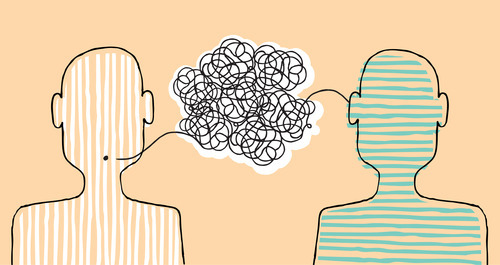


The first thing we need to take in consideration is the method of communication (CQUniversity 2016, p.1). Using our logic, we need to choose the most appropriate method. For example, the logical method of communication with a group of people who suffer from hearing impairment, is obviously, the sign language. Grice (2004, p. 42-43) concludes that, it is essential to analyse the way of expression, to achieve a successful conversation.

Based on the context of the communication, you need to organise and think ahead. Thinking brings us back to logic. While planning your contents, considering who you are talking to and what you are trying to say, you find a logical way to connect the medium, the message and the audience. (Eunsen 2012, p. 351).  If you talk to a 3 year old using a powerpoint presentation with words, the chances are, they will not be very interested. But, if you make a short animated film about the same topic, they will probably pay more attention.


Most importantly, logic is essential when preparing arguments. (Eunsen, 2012, p. 380). A great example is writing an academic paper. We follow a writing process. The first step is planning, which consists of choosing a topic, an audience, a tone, a subject matter and doing research (Dziak, 2015). These all have to be connected and need to follow a logical path to the next step.

All in all, it is obvious that planning and logic go side by side when we want to avoid confusion and achieve understanding.


Click on the video below if you'd like to listen to an outline of the key questions of planning for communication, using logic. :)  


References

CQUniversity 2016, COMM11011 Lesson 5 - Planning, Logic and Organisation: Study Guide CQUniversity, https://moodle.cqu.edu.au/pluginfile.php/242786/mod_resource/content/1/Weekly%20lesson%205.pdf

Dziak, M 2015, 'Writing Process (planning, drafting, revising, editing, publishing, Salem Press Encyclopedia, viewed 2 February 2016. http://ezproxy.cqu.edu.au/login?url=http://search.ebscohost.com/login.aspx?direct=true&db=ers&AN=98402242&site=eds-live&scope=site

Eunson, B 2012, 'Communicating in the 21st Century, 3rd edn, John Wiley & Sons Australia Ltd, Milton

Grice, H.P 2004, 'Logic and Conversation', University of California, pp. 41-58, viewed 1 February 2016. https://edge.edx.org/asset-v1:Brown+CSCI2951-K+2015_T2+type@asset+block/grice75.pdf

Tumblr, Alittlecarma-communication, Digital Image, viewed 2 February 2016. http://33.media.tumblr.com/31d43994581456b81403516f3355e7e5/tumblr_inline_nks5zozhd31toltk5.jpg

Tumblr, Object Sketching, Digital Image, Viewed 2 February 2016. http://media.tumblr.com/tumblr_lfwoxfwJdU1qz9qz5.jpg


Sunday, 31 January 2016

Week 9 - Teamwork, Negotiation and Conflict Resolution.

How To Negotiate With Strangers?

It's 2016 and the business world has evolved so much, expanding it's boundaries with new companies entering the market, now locally and globally. As result, negotiating with 'strangers' from another company or another culture (representatives of these companies) is very common for knowledge workers in areas such as business and commerce. But it can also be a real challenge.

There are several things to take in consideration while negotiating with someone you don't know, whether it is formal or informal. Stein & Tantawi (2015) suggest that before the negotiation takes place one has to prepare arguments, find facts that support them, and also learn as much as you can about the other person, their culture, what they value. Apart from research, Eunsen (2012, p.412) explains that you need to have a clear goal and plan accordingly.

An important factor to take in consideration, are the emotional elements (Stein & Tantawi, 2015). When you are talking to a stranger you need to make sure you are showing respect. You need to pay attention to their emotions and try to make them feel better if they're nervous (Brooks 2015, p.60). It is essential to manage your anger and make the other person feel equal and not threatened.

Another factor that can be used to persuade a stranger are concessions. You need to give in order to get, and since you don't know the other person, giving something that's valuable to them, will make the negotiation easier. But, remember to always get something in return (Eunsen 2012, p.413).

Negotiating is a complicated process that can get even more difficult when the other person is a stranger. You should always have your goal at the back of your mind while negotiating. You want to solve a problem, so it's important to focus on the interests of each party, instead of the disagreements in order to have a positive outcome.

Click the link below if you've got some time to spare and want to learn more tips on negotiating.
https://www.youtube.com/watch?v=1FeM6kp9Q80


References

Brooks, AW 2015, 'Emotion and the Art of Negotiation', Harvard Business Review, Vol. 93, No. 12, pp. 56-64, Business Source Complete, EBSCOhost, viewed 31 January 2016. http://ezproxy.cqu.edu.au/login?url=http://search.ebscohost.com/login.aspx?direct=true&db=bth&AN=111098637&site=eds-live&scope=site

Eunson, B 2012, Communicating in the 21st Century, 3rd edn, John Wiley & Sons Australia Ltd, Milton

Management Paradise, Red-Blue-Guys-Shaking-Hands, Digital Image, Viewed 31 January 2016.http://www.texasrestaurantlaw.com/file/2009/10/red-blue-guys-shaking-hands.JPG

Public Sphere 2010, 'Negotiation', viewed 31 January 2016. https://www.youtube.com/watch?v=1FeM6kp9Q80

Stein, R & Tantawi, R 2015, 'Negotiating', Salem Press Encyclopedia, EBSCO host, viewed 31 January 2016. http://ezproxy.cqu.edu.au/login?url=http://search.ebscohost.com/login.aspx?direct=true&db=ers&AN=100259589&site=eds-live&scope=site 


Tuesday, 26 January 2016

Week 10 - Ethics in a Professional Context

Ethics and the sharing of private Information

Nowadays, it is essential that we give out our information, whether it is to get a new job, to get a voucher at the grocery store or simply to socialize through social media, but where does this normal activity of 'sharing' become 'oversharing' and turns into an ethical problem?

First of all, ethics is defined as a set of principles that decide whether an action or an idea is right or wrong (CQUniversity 2015, p.1). Just because something may be wrong, it doesn't necessarily mean it is illegal, so that makes its occurrence more common.

When we share our information, we do it thinking it won't be misused, but that's not always the case. At the point where our private information becomes available to a wider audience than which we originally planned, an ethical code is broken and this makes us come to the realization that we've been used.

Replogle (2014, pp.740) discusses about social media and how online information-sharing is different for famous people, and obscure people like you and me, concluding that what's unethical about it, are the critics of those brave enough to tell the truth.

Social media, however is only one page of this big book on information privacy threats. We are  customers and employees of organisations with their own privacy policies that protect us (Lening, 2016, p.52). For example, every time you create an account online you have to 'agree with the terms an conditions' of these policies, but to be fair, most of us are too lazy to read the whole page before ticking the box. As result, you don't know what you're getting yourself into.

The sharing of information has truly taken over our private and professional lives and ethics remains an issue of our 21st century society, so the best we can do, is try to be as careful as we can to protect ourselves.

References

CQUniversity 2016, COMM11011 Lesson 10 - Ethics in a Professional Context: Study Guide, CQUniversity, https://moodle.cqu.edu.au/pluginfile.php/242804/mod_resource/content/1/Weekly%20lesson%2010.pdf

Eunson, B 2012, Communicating in the 21st Century, 3rd edn, John Wiley & Sons Australia Ltd, Milton

JSCBlog, Speech Bubbles for right and wrong, Digital Image, Viewed 25 January 2016.http://www.stanfield.com/wp-content/uploads/2011/10/photodune-2416022-two-speech-bubbles-drawn-with-chalk-on-a-blackboard-for-right-and-wrong-s.jpg

Lening, C 2016, 'Personalization, Privacy and the Problem of 'Oversharing'', Online Searcher, Vol.40, no.1, p.50, viewed 25 January 2016.
http://eds.b.ebscohost.com.ezproxy.cqu.edu.au/eds/pdfviewer/pdfviewer?sid=98f70a82-ef8e-46ea-aa29-e93bbeae0acd%40sessionmgr110&vid=1&hid=104

Replogle, E 2014, 'Fame, Social Media Use, and Ethics', Sociological Forum, Vol.29, no.3, pp.736-742, viewed 25 January 2016.
http://eds.b.ebscohost.com.ezproxy.cqu.edu.au/eds/pdfviewer/pdfviewer?sid=d36a9ced-64b7-42c6-bba3-6303a65a1e59%40sessionmgr110&vid=1&hid=104


Sunday, 24 January 2016

Week 8 - NonVerbal Communication: Understanding Yourself and Others

Non-verbal Communication in Facial Expressions

One of the most important ways that help one communicate his feelings and thoughts is non-verbal communication. Things such as gestures, your personal style and clothing, the way one talks or moves his body together with facial expressions, can sometimes say a lot more for a person than
words. To me, our facial expression says a lot more than the other ways of communicating non-verbally.

The basic facial expressions such as anger, joy surprise, sadness, fear, disgust are interpreted the same by everyone. These are referred to as macro-expressions whereas other emotions can be harder to read or be understood and as result, easier to hide (Matsumoto & Hwang, 2011).

One important part of communication through facial expressions are the eyes. Referred to as ' portal of the soul' by many (Eunson, 2012, p.262), they can express a lot more than other parts of the face. The movement of the pupils or the number of times that we blink can express interest in something or nervousness.


It is true that facial expressions are a body's immediate reaction, however that doesn't mean they can not be controlled or suppressed. According to Eunson (2012, p.261), this is affected by several factors, among which, their cultural background: Australians tend to express more through facial movements whereas the Japanese value suppressing their emotions.


Ekman (1973, p.73) discusses how facial expressions indeed differ between different cultures, but that also depends on other subjective factors like the expression itself, the context or even your social status. Eunson ( 2012, p.261) gives an example with lower-status individuals express more through their faces than those of a higher status.


To conclude, as humans we can change our face expressions and choose to show more or less emotion in certain occasions, but there is only so much that we can hide. Some of us are better actors, whereas others can be more 'honest'. Either way, our faces remain a great tool in understanding our reactions and feelings.


References:

CQUniversity 2016, COMM11011 Lesson 8 - Nonverbal Communication: Understanding yourself and others: Study Guide, CQUniversity, Melbourne. https://moodle.cqu.edu.au/pluginfile.php/242800/mod_resource/content/1/Weekly%20lesson%208.pdf

Disney 2015, Inside out: The little voices inside your head. Digital Image, viewed 15 January 2016.http://www.magicalmouseschoolhouse.com/2014/12/inside-out-trailer/

Ekman, P 2006, Darwin and facial expression: A Century of Research in Review, ISHK.

Eunson, B 2012, Communicating in the 21st Century, 3rd edn, John Wiley & Sons Australia Ltd, Milton

Matsumoto, D & Hwang, H.S 2011, 'Reading Facial Expressions of Emotion', American Psychological Association, May. http://www.apa.org/science/about/psa/2011/05/facial-expressions.aspx

The tiffany that Draws 2015, digital image, viewed 15th January 2016. http://tiffanydraws.tumblr.com/post/77157419834/mental-disorder